

Your Rent, Made Simple
Learn about the different ways to pay your rent and access tools like benefit calculators, budgeting support, and guidance on how your rent and service charges are worked out.

Pay your rent online
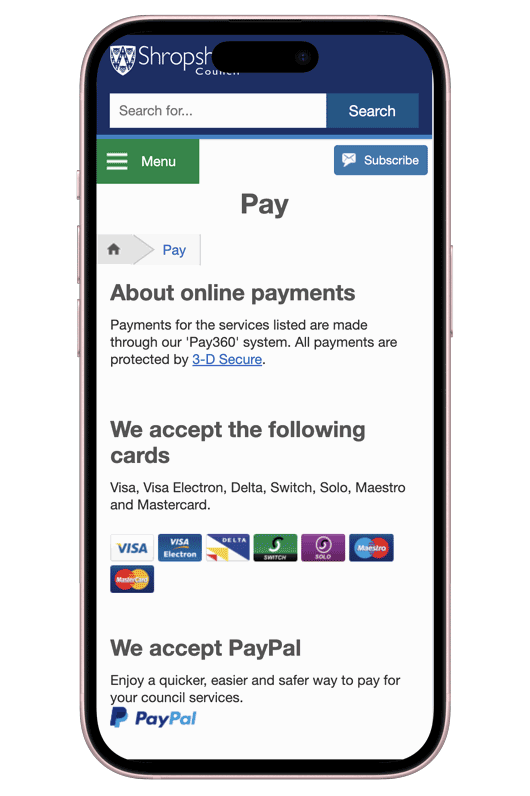
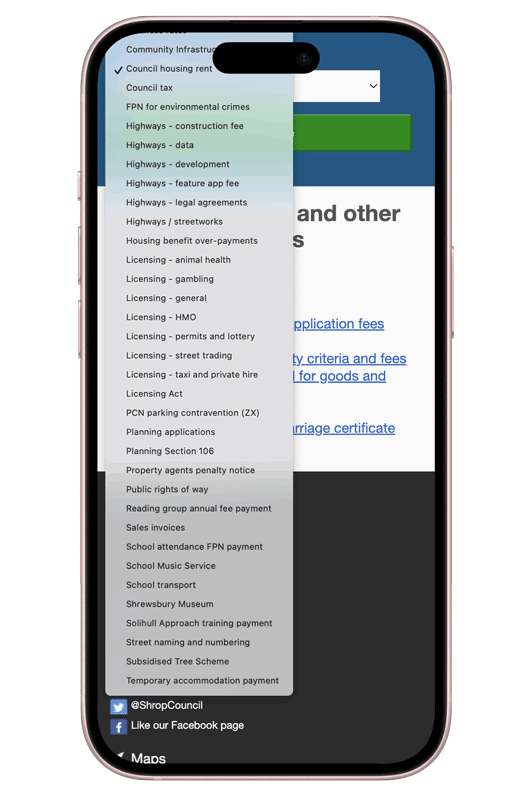
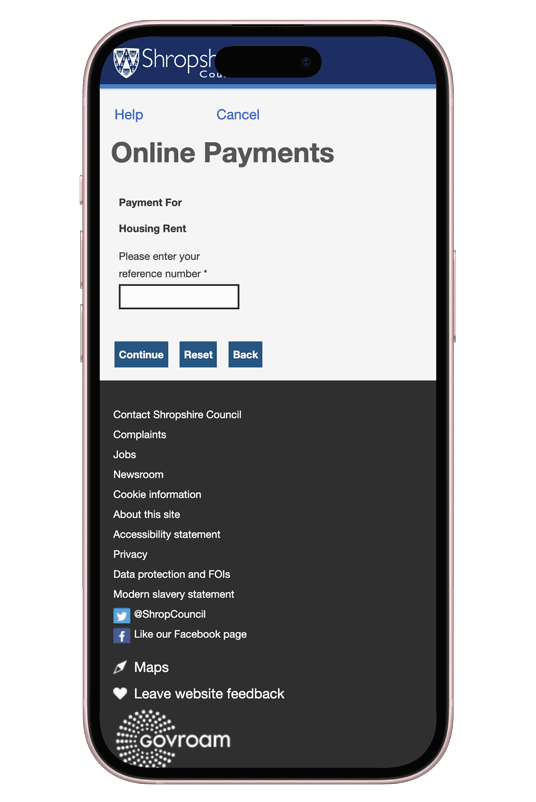
It’s easy to pay your rent online. You can pay your house or garage rent securely online, 24 hours a day using the Shropshire Council payment system
Choose how to pay your rent
We offer a variety of ways to pay your rent, so you can choose what works best for you.
Set it and forget it. Direct Debit is the simplest way to make sure your rent is paid on time.
Direct Debit is the easiest and most reliable way to pay your rent.
It’s free, safe, and guaranteed, and it means your rent is paid on time, every time, without you having to lift a finger.
We offer paperless Direct Debit payments, and you can choose any day of the month that suits you.
To set it up, just give us a call, our team will guide you through it quickly and securely.
A Standing Order is another way to pay your rent regularly, but unlike Direct Debit, you stay in control of the payment amount and schedule.
To set one up:
You can pay your house or garage rent securely online, 24 hours a day using the Shropshire Council payment system
You can pay your rent directly from your bank account using online banking.
Please use the details below:
You can pay your rent using a debit or credit card over the phone, any time of day.
To make a payment:
You can pay your rent in person using a swipe card, which we provide.
Where to pay:
Need a swipe card?
If you don’t have one — or need a replacement — just contact our Rents Team and we’ll arrange it for you.
hello@starhousing.org.uk
Tip: Have your rent account number handy when making a payment.
To make a payment:
How Rents Are Set
Here is some further information about how rents are set that you may find helpful.
Social Rent
Social rent is a lower‑cost type of rent offered by councils and housing associations. It is designed to be genuinely affordable and is usually much lower than private market rent.
How Social Rent is Set
- Social rents are initially set at “Target Rent” (also known as Formula Rent) when a property is first let.
- Target Rent is not chosen locally—it is calculated using a government prescribed formula.
The formula considers:
After the initial setting, rents are then uplifted annually based on inflation, regardless of a change in tenancy.
Social Rent is intended to:
- Provide affordable and secure housing for local residents
- Ensure rents remain consistent and fair across similar homes
- Keep the Housing Revenue Account (HRA) financially sustainable over the long term (as 90% of the rented homes under Shropshire Council fall into the Social Rent category).
If you have a Social Rent tenancy, your service charge breakdown explains the cost of any services you receive that aren’t included in your rent. We estimate these costs by looking at what the service has cost in previous years and considering what may be needed in the year ahead.
You can find more information about how rents are set here: Rent Standard and Guidance
Affordable Rent
Some homes — such as new builds or higher-value properties, are let under a different system called Affordable Rent.
Affordable Rent homes are let at up to 80% of market rent. This type of rent is designed to remain affordable for households, while also helping to generate income that supports the development of more affordable homes in the future. It’s usually offered on selected general needs properties, mainly houses, and only applies when a new tenant moves in. Existing tenants are not moved from Social Rent to Affordable Rent.
If you have an Affordable Rent tenancy, your communal service charges are included within your rent. This means you won’t see a separate breakdown for these shared services. You may still receive a breakdown for any charges linked to personal use, such as heating and hot water supplied to your home, or the garden assist scheme.
Service Charges
In addition to your rent, you may also be charged for certain services linked to your home. These are called service charges, and you will only be charged if you receive the service.
Service charges are calculated on a fixed basis, which means they stay the same throughout the year. This makes them more predictable and helps protect tenants from sudden changes in cost, such as spikes in energy prices. For example, tenants paying communal energy costs would have been protected from the initial rise during the energy crisis.
Annual service charges vary depending on your home and the type of tenancy you have, including social tenants, private tenants, shared owners and leaseholders.
We estimate these charges by looking at how much services have cost in previous years and then working out the likely cost for the coming financial year. Homes are grouped into blocks or estates when charges are shared. Service charges are apportioned according to what is set out in your tenancy agreement, lease or any other legal document relating to your home, and based on the services you receive.
Like your rent, your service charges are reviewed each year, and any changes will be shared with you at the same time as your rent notification.
If you receive Universal Credit or Housing Benefit, some service charges may be covered — these are known as eligible charges. These typically relate to communal services, such as communal electricity or cleaning. Other charges are ineligible, such as personal heating or hot water, or the garden assist scheme, and these are not covered by Universal Credit or Housing Benefit.