
| Lead Manager: | Head of Assets |
| Responsible Senior Manager: | Head of Assets |
| Approved By: | STAR Board |
| Date Approved: | 24.05.22 |
| Date for Review: | 24.05.24 |
| Replaces Previous Version: | 4.1, 22.01.19 |
| Version Number: | 4.2 |
| Linked Policies: | Shropshire Council’s Community Strategy, Housing Strategy 2020-25 and Housing Allocation Policy Shropshire Towns and Rural Housing’s Business Plan, Equality and Diversity Framework, Value for Money Framework, Sustainability Framework, Enabling Independent Living Framework, Responsive and Planned Maintenance Framework, Disposals Framework, Procurement and Contract Rules. |
1.INTRODUCTION
1.1 Purpose of an Asset Management Framework
The nature of property is that it is expensive and that buildings are expected to last a long time, and can be costly to alter and maintain.
Asset Management is the effective targeting of resources to where they can have the greatest impact in raising standards and delivering value for money. The aim is to deliver good quality homes for those people that live in them as well as building sustainable neighbourhoods and communities.
The Asset Management Framework helps us to ensure that our homes are fit for purpose and are ones that our current and future tenants want to live in. We want to ensure that our homes are of the right type, in the right location, are affordable, energy efficient and are healthy, safe places to live. To achieve this, our investment programmes must be well considered to meet potential future changes in demographics, demand for our homes and the aspirations of our customers.
This Framework describes the parameters within which decisions are made about our improvement and investment programmes. It also seeks to provide an understanding of the sustainability of our assets and provide a sound basis to determine our investment priorities,
1.2Key Priorities
We work closely with Shropshire Council in the delivery of their Housing Strategy 2020-25 and the key aims of the Strategy is to ensure that the
‘That all homes are well designed decent homes of high quality, which will protect Shropshire’s unique urban and rural environments and ensure it is a great place to live.
and
That all Shropshire residents have access to the ‘right home in the right place’ to support and promote their health and wellbeing throughout their lives.
The work that we have been carrying out has significantly helped to achieve this aim in an important proportion of the County’s social housing. This has been achieved through undertaking a significant programme of works inside our properties in order to meet and maintain the Decent Homes Standard. From our inception this was prioritised under the remit of “Warm and Weather tight” and was initially based on the priorities identified by tenants in 2010 and further work we have carried out when meeting the Decent Homes Standard.
Where possible, within existing funding we have continued to go beyond the minimum standards set out within the Decent Homes Standard 2006 although funding has meant that we have not been able to carry out all the modernisation that we wished
or meet tenant aspirations to go significantly beyond the Decent Homes Standard. We await the publication of the revised Decent Homes standard that is anticipated to be published during Summer/Autumn 2022.
All homes managed by STAR Housing were made decent by April 2015 and we have continued to maintain this standard
The Department for Levelling up, Housing and Communities is in the process of reviewing the Decent Homes Standard. This follows the Social Housing White Paper that was published on 17 November 2020 announcing this review of the Decent Homes Standard to understand if it is right for the social housing sector today. Their review is being carried out in two parts, with part 1 having run from Spring to Autumn 2021 which sought to understand the case for change to criteria within the Decent Homes Standard.
Part 2 of the review commenced in Autumn 2021 and it’s remit is to consider how decency should be defined. At this time we await the outcome of Part 2.
Since April 2009 the capital programme since has been largely confined to the internal improvement of the stock in order to meet Decent Homes. Although these programmes of work are still ongoing we have been able to review this balance. We have included improvement works to the environment around our stock as well as the stock itself. We need to ensure that all our stock is attractive to potential tenants and other residents and visitors to the area, as well as providing a high standard of affordable accommodation for all tenants.
This Framework is a key element of the overall 30 year HRA self-financing business plan, which seeks to plan the use of available funds from rents and other income to deliver high quality housing management and maintenance for all of our tenants as well as a programme of capital works, The timing and availability of funding will mean that some of the works, for example sustainability, set out in this framework will not be achievable in the short or medium term, and it will be necessary to prioritise this programme over the later periods of the 30 year business plan. The HRA Business Plan continues to be under review and is required to be flexible, as the priorities both of Shropshire Council and Government, but also our tenants continue to change and evolve.
One of our key priorities is to continue to carry out planned maintenance and improvement programmes to maintain our homes at the current Decent Homes Standard and minimum legislative standards. We will also ensure that our homes meet the required minimum standard for energy efficiency. This is important because not only are we complying with legislative standards1 but an energy efficient home is a home that will be affordable for tenants to run as outlined in our Sustainability Framework. The programmes include:
1 Under the Minimum Energy Efficiency Standards (MEES) from the 1st April 2018 a property must meet minimum Band E minimum performance rating (SAP 39 – 54) in order to be let. Our performance indicator for energy efficiency standards includes for an average SAP rating of 67.5 for stock “on grid” and 55.5 for stock “off grid”.
- Replacement of Decent Homes components (kitchens, bathrooms, heating systems and electric upgrades) in line with expected lifetimes. This will also allow us to pick up those properties where tenants have refused works under the main Decent Homes Programmes when the properties become void.
- Developing our programme of energy efficiency improvements (this will expand as technologies progress). The focus of these works will be:
- Works that provide more efficient (and cost effective) heating systems for all tenants to help avoid fuel poverty.
- Works that will enable tenants (and the landlord) to benefit from cheaper or free electricity using new technologies and “green deal” funding opportunities when appropriate.
- Continuing to improve the SAP rating for our stock through improvements in the thermal efficiency of the properties.
This framework also recognises that we continue to need to increase stock numbers that is available to let, in particular to mitigate the impact of the changes to the discount available under the Right to Buy programme from the 2nd April 2012 that have resulted in increased levels of stock loss. This is an issue for us as with the continued loss of stock it reduces the income that we have to pay for investment and services plus there are diseconomies of scale as our stock decreases.
As part of our linkage to Shropshire Council we aim to assist in the delivery of a key priority in their Housing Strategy to ensure there is a ‘range of housing’ in the County. In addition our new development programme continues to contribute to the wider Shropshire Council objective of ‘promoting economic growth’.
There are two options available to increase the housing stock. The first is the development of new build properties and the second option is the purchase of existing properties. Both options are restricted by the funding available to us but there are opportunities that we can explore and realise in the coming years in order to retain the viability of the service and make the necessary contribution to the aims of Shropshire Towns and Rural Housing and the wider Shropshire Council objectives.
Development of new homes and purchases of existing homes to increase our portfolio can be funded from a combination of the following sources;
- Homes England Funding (Affordable Housing Programme various) – As at April 2022 we have been successful in securing £4.93 million grant since we commenced our new build programme in 2011.
- Right to Buy Receipts – We have approval to recycle a percentage of Right to Buy Receipts in order to develop properties to replace those sold under this scheme and the timescale to recycle is four years date of sale where applicable.
- Housing Revenue Account
- Developer contributions – including S106 payments – We have continued to be able to access this funding as part of the funding for our development programme. Future contributions will be determined by Shropshire Councils Housing Enabling Team.
- Use of the Affordable Rent product (80% of market rent) for new build or acquired properties, and the possible conversion of voids to affordable rent to generate a greater rental stream to service any borrowing and reduce the need for grant or other funding streams. We were given approval to convert 204 tenancies to affordable rent under the HCA 2011-15 Affordable Homes programme. As part of our funding bid for the HCA’s Affordable Homes Programme 2015- 18 we were given approval to convert a further 58 properties to this form of tenure.
- We have purchased existing properties where funding is available and there is a demonstrable need for the type of property. At this time we consider the purchase of leasehold properties within existing stock as a priority but will also consider the purchase of freehold properties as they arise. Where appropriate we will also consider Right to Buy properties where we have first refusal within 10 years of sale as we already have housing management resources in these area. To date it has been the case that these properties purchased off the “open market” have required further expenditure to carry out works to bring these up to the Decent Homes Standard prior to offering them for rent.
- Following approval by Shropshire Council in January 2022 we are in the process of purchasing 60 units to be held in the HRA for use by Shropshire Council’s Temporary Accommodation. These properties are a mixture of open market purchases and those identified from within Shropshire Council’s asset base or from other registered providers that have been identified as surplus.
- We have begun to purchase S106 new build properties via local contractors as well as those from Shropshire Council’s Development Company, Cornovii Homes.
- Borrowing – following the removal of the HRA borrowing cap in 2018 we have the opportunity to fund new development or acquisition through additional borrowing. We would not propose to undertake borrowing for planned maintenance or improvement work as the debt would be unsupported due to the lack of additional income arising from this investment.
1.3 Key Objectives of the Asset Management Framework
Within Shropshire Council’s Housing Strategy there are 6 key priorities. These are to ensure that there is:
- To meet the overall current and future housing needs of Shropshire’s growing population by addressing the housing needs of particular groups within communities.
- To ensure people whose housing needs are not met through the local open market housing can access housing that meets their needs.
- Work to reduce and prevent households from becoming homeless, and where this is not possible ensuring they have safe, secure and appropriate accommodation until they are able to resettle.
- To ensure people can access a mix of housing options within Shropshire’s urban and rural landscape that best meets their needs in terms of tenure, safety, size, type, design and location of housing.
- To minimise the environmental impact of existing housing stock and future housing development in the interest of climate change. To work with policy makers, developers and private and social landlords to maximise resource efficiencies and to ensure optimum use of sustainable construction techniques.
- To support the drive for economic growth by ensuring that there is enough housing supply to enable businesses to attract and retain the local workforce that they need.
In the context of our Asset Management Framework we have outlined our key priorities but we have and will also develop actions to contribute to the wider priorities of Shropshire Council’s Housing Strategy and contribute to the overall aim of the Strategy by ensuring that we:
- Provide comfortable and well maintained homes that continue to meet the Decent Homes Standard as a minimum
- Provide safe and secure homes
- Provide an attractive and safe external environment to our homes to ensure that common areas can be enjoyed by all residents without risk
- Improve the energy efficiency of our homes to enable our residents (and the landlord) to benefit from lower energy costs
- Ensure that, to the best of our abilities and the limitations of the property our homes are fit for purpose and suitable for occupation whatever the disability a tenant might have
- Increase the numbers of properties available to those that want and need it through development and acquisition.
Exactly what this means will continue to be developed in the context of what tenants say about their homes and the funds available for investment. The activity required to develop this activity and some of the key actions as to how we will achieve these objectives is set out in the Framework.
1.4 Caveat to this Framework
- The revision to the Decent Homes Standard is still awaiting publication and as such we are not able to determine the impact this may have on the HRA’s capital programme and its priorities
- We will work with Shropshire Council to assist in the delivery of their priorities in relation to the supply of new affordable housing, the provision of temporary accommodation and the provision of specialist accommodation in conjunction with the Adult Social Care team, and Carbon Emissions Reduction throughout Shropshire in line with Shropshire Council’s declaration
of a Climate Emergency in 2019. How these priorities are to be ranked will be subject to agreement following the approval of our Management Agreement with Shropshire Council.
- As at April 2022 the Building Safety Bill is in its final stage of “considering amendments” before receiving Royal Ascent. Although we do not manage any high rise properties over 18 metres high there are a number of areas of our work that are likely to be within scope of this legislation.
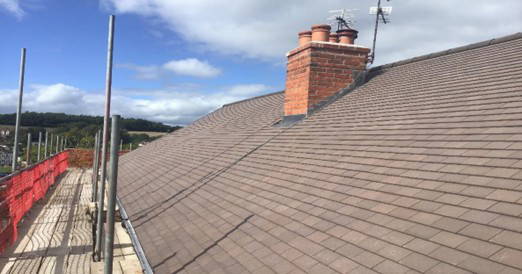
New roof installation as part of programme of replacement roofs in Bridgnorth
2.BACKGROUND
2.1 Shropshire Council Housing and Shropshire Towns and Rural Housing Ltd
Shropshire Council own 4,000 Council homes that were originally held by two former Councils in Oswestry and Bridgnorth. The homes have been managed by Shropshire Towns and Rural Housing Ltd since 1ST April 2013 as an Arm’s Length Management Organisation of Shropshire Council. Prior to this date Shropshire Councils Landlord Services managed the Housing Stock following the formation of the Unitary Council in April 2009 as a ring fenced account.
Shropshire Council is currently in the process of determining an extension of the Management Agreement and the services delivered by us under this agreement.
2.2 Levelling up (Localism) and Welfare Benefit reform
The “Levelling up” agenda and reform of the welfare benefits system continue to be two fundamental elements of the Governments policy programme. The stated intention of the localism agenda has been to prompt the shift of power for the political/administrative centre out to local government and local communities.
The Department for Levelling Up, Housing and Communities have set out their intentions concerning Levelling up in their White Paper “Levelling Up the United
Kingdom – An Executive Summary published in February 2022. The key aims in relation to social housing within this publication are:
- To improve pride in place in every area of the UK, with the gap between top performing and other areas narrowing.
- Poor housing quality, overcrowding and a reliance on temporary accommodation for vulnerable families also contribute to unnecessarily poor health and quality of life for many. We will take action on two fronts. First, building more housing in England, including more genuinely affordable social housing. Second, we will launch a new drive on housing quality to make sure homes are fit for the 21st century.
- To deliver our mission to improve housing conditions, we will introduce new legislation to improve the quality and regulation of social housing, give residents performance information so that they can hold their landlord to account and ensure that when residents make a complaint, landlords take quick and effective action to put things right
The Localism Act 2012 meant that we moved from a system of complex subsidies into and out of the service to one that is ‘self-financing’. The key change as part of this “self-financing” was that the service is required to focus on paying back the allocated of debt of around £84m as well as delivering services tailored to local people and communities. However this does mean that we are able to plan for the management of assets over the long term much more effectively than we could under the previous financing provision as we have greater certainty around the income that the service collects, greater stability and freedom to plan how we spend our money and manage our resources.
As well as this positive change we also continue to have a number of challenges. These include changes to the welfare benefits system. The introduction of Universal Credit payments direct to tenants and the reduction in benefits has not significantly reduced the income available to the service to implement its asset management aspirations and plans. We have continued to review our service to ensure that we mitigate the impact of these changes to try to maintain our income levels.
An impact of reductions in housing benefit payments to those under-occupying properties has had an impact throughout the service and we continue to respond to these changes (We have developed a separate Framework regarding how we will tackle issues around Under Occupation). We continue to see an impact these reforms will have on demand and void turnover from tenants to move to smaller accommodation in order to avoid the additional financial burden.
We are not yet able to fully account for the current cost of living “squeeze” and the impact of the lifting of the “fuel cap”. This is likely to have an impact both in rental collection as well as living conditions. We will work closely with our tenants to ensure that we help them from a Financial Inclusion point of view, as well as working to improve the energy efficiency of their homes.
The announcement in the Budget statement on the 8th July 2015 of a 1% rent decrease each year for the next four from the 1st April 2016 for all social housing tenants had an impact on the programmes of work that could be delivered as well as management of our tenants’ aspirations for their homes. In spite of this
rent reduction we were and have continued to be able to retain 100% decent homes standards within our stock but the opportunity to improve them beyond that was limited.
3.ASSET MANAGEMENT PROFILE AND PERFORMANCE
As at 1st April 2022 the service is responsible for managing 4,014 residential dwellings. In addition to rented properties we also manage a further 140 leasehold properties.
We have carried out strategic regeneration of sites as part of our new build programmes. Any reductions are projected to be limited to small numbers of Right to Buy disposals. At the time of self-financing in 2012 it was projected that an average of 9 properties per year will be disposed of via Right to Buy, although following the amendments to this scheme in April 2012 this figure has average around 30 disposals per year.
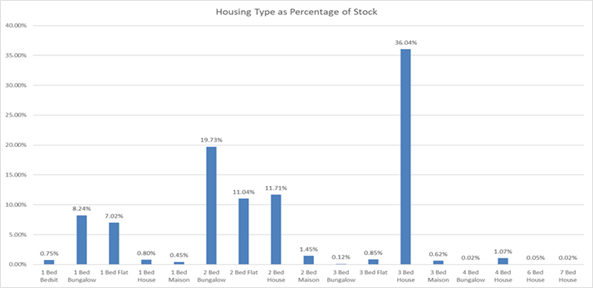
The graph below details the stock by Type and number of bedrooms as at 1st April 2022
3.1 Factors around older and vulnerable groups.
All of the key data relating to current and projected housing need suggest that there will continue to be a sustainable demand for the HRA stock for the foreseeable future. The rising ageing population in particular is expected to add further to demand for our housing stock.
Currently our own stock has a high number of older people in its tenant population with 41.85% of tenants over 65 years of age. 1712 of our tenants have advised us that they have a declared vulnerability.
Shropshire Council continues to implement its Personalisation of Adult Social Care Services. Following the adoption of its Adult Social Care Strategy in 2018, its focus is to promote, maintain and enhance people’s independence so that they are healthier, stronger, more resilient and less reliant on formal social care services.
Shropshire Council’s Adult Social Care’s Vision is founded in the principle of building independence and contribution to society for people with health and social care needs. This enables people to remain independent and active members of their communities for as long as possible.
The key strategic priorities for older and vulnerable groups relevant to the Asset Management Framework are
- Creating resilient communities and helping individuals to continue to live independently
- Helping individuals prevent or reduce needs
- Delaying the impact of an individual’s needs
- Meeting individual needs through a creative approach to care that is value for money
Our service will therefore continue to need to meet the needs of our existing tenants who may need to receive services or need a more suitable or adapted property to meet their needs as well as play our part in meeting the needs of the wider Shropshire community for housing.
As part of this agenda it is important to ensure that home energy efficiency and affordable warmth assistance is available to older, disabled and vulnerable households in order to help make their homes more comfortable and affordable. As part of the Choice Based Letting (CBL) process we keep information relating to adaptations and/or accessibility for an advertised property. We make sure that this information is available for applicants to see so potential tenants can make an informed judgement when bidding for properties.
This will help the service to match people to properties that have already been adapted, and also protects the value of adaptation works that have already been undertaken. The Shropshire-wide Allocations Policy has been reviewed and this will assist to better ensure that the needs of new tenants are able to be matched to available housing.
Within the existing HRA stock there are a variety of properties that are suitable for older people.
- Grouped dwelling schemes comprising of bungalows with purpose built community centres
- Grouped dwelling schemes comprising of bungalows without communal facilities
- Grouped dwelling schemes with access to communal facilities located in nearby schemes.
Although we have a good supply of supported housing and housing suitable for older and disabled people the majority of our stock does not meet modern expectations such as a second bedroom to provide overnight accommodation for carers and family, and greater communal space. There are also a number of bedsit properties that have caused problems in letting and it will continue to consider these either for remodelling of layout or scheme to make these more attractive for letting.
We are in the process of upgrading these schemes and rebranding them as Enhanced Independent Living communities, with Greenfields Court in Bridgnorth as the pilot scheme.
As the service does not have access to Government Disabled Facility Grant Funding the service funds directly the required improvements to homes to make these more suitable for disabled people. We have spent around £3m on the funding over the last 9 years. Part of this has been supported by additional Council funding to reduce the waiting list for adaptations in Shropshire and to assist when larger adaptions are recommended and no alternative accommodation that is already suitably adapted is available. We are committed to an ongoing programme of expenditure of £250,000 per year. We continue to review all Occupational Therapist recommendations plan to ascertain whether supporting tenants to move to more suitable accommodation is appropriate, rather than carry out proposed adaptions.
Shropshire Council amended its delivery of the Disabled Facility Grant and is prioritising requests by need. This prioritisation is determined by the Occupational Therapists when they are producing their recommendations. We continue to deliver adaptations in line with this amendment to their service.
3.2 Stock Condition
Prior to April 2009 Savills were commissioned to carry out a 50% stock condition survey. This provided a valuable snapshot of our stock. Since then we have continued to develop this information when carrying out Programmed Works to form a comprehensive database of all of our properties. Condition surveys for all properties have been carried out and we now have a rolling five year programme of condition surveys to all properties, although this is subject to obtaining access.
3.3 Major Works Programme
The main focus of investment activity since April 2009 has been the delivery of the Decent Homes Programme. Initially we prioritised elements that tenants had identified as a priority but since then the scope of the work has widened. This has resulted in substantial upgrading and replacement of key internal components, which was the main area of need identified to meet the Decent Homes Standard.
The other main area for investment has been insuring that the health and safety of our tenants is prioritised with programmes of Asbestos surveys and remediation work, and Electrical Inspection and resulting in upgrades. We have also prioritised works identified following Fire Risk Assessments.
We reached 100% Decent Homes Standard by 31st March 2015 and have continued to maintain this standard.
There continues to remain a number of properties where tenants have refused access for a range of reasons. In line with Government Guidelines these
properties are dealt with as they become void, and provision is made within capital budgets to allow for this.
In line with Shropshire Councils Corporate Asbestos Management Plan we have carried out an extensive programme of Asbestos Surveys and resulting remediation works. These have been carried out prior to Decent Homes improvements or at change of tenancy. This has been a major area of work for the Asset Management team. All properties have had a Management survey carried out. We have implemented a programme of visual surveys on a 5 year rolling programme with the intention of limiting disruption to tenants. It is necessary to carry out annual inspections of asbestos containing materials in communal areas on an annual basis, as there is greater potential for damage in these areas.
3.4 Current Assessment of stock condition
A rolling programme of stock condition surveys has been implemented with the introduction of mobile technology to assist in the collection of data. As mentioned subject to access all properties are resurveyed on a five year basis. These surveys include external and communal areas, and dependent upon risk these areas may be resurveyed more regularly.
We have focussed on Decent Homes and internal components of our housing stock, and also health and safety issues, disabled adaptations and cyclical maintenance in communal areas e.g. external painting programmes. As a result we have only started to carry out investment to the environments around the properties in the last 4 years which have an impact on our tenants and the desirability of our estates. These works have included improvements to former garage sites not suitable for development to provide additional car parking on some of our older estates.
We have continued to allow for an annual budget that is targeted at community projects, following community consultation to improve the local environment. These have included improvement to car parking, road safety (bollards and signage), drying areas, as well as community gardens, landscaping and solar street lighting. Prior to approval these scheme are reviewed using the HACT social value calculator.
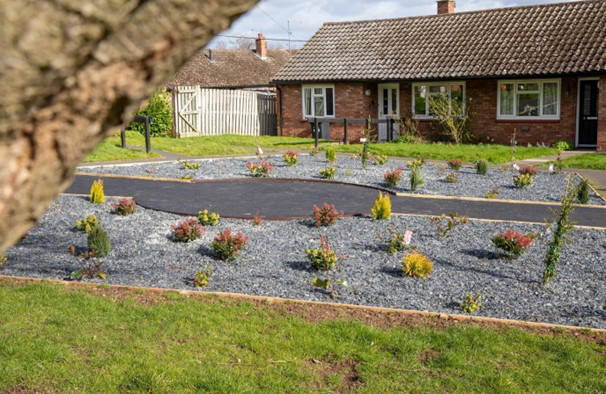
Beech Road, Bridgnorth – Following consultation with the residents the area was cleared and a low maintenance garden was created.
4. CLIMATE CHANGE AND ENERGY PERFORMANCE
Shropshire Council declared a Climate Emergency in 2019. We have been working to reduce our carbon footprint but also address the energy efficiency of our homes prior to this declaration. Our Sustainability Strategy outlines both the work already done, the challenge and the plan for the future
The work undertaken to meet the Government’s Decent Homes Standard ties into both the energy efficiency and carbon reduction programme. It is better to help tenants to not have to use as much energy to heat their homes in the first instance. This has included the “normal” measures of cavity wall insulation and loft top ups, accessing grant funding when available, and working closely with partners including Marches Energy Agency and utility companies
Regular surveys are carried out by our in-house team of surveyors, who as well as assessing stock condition are also trained Energy Performance Certificate surveyors. To assist tenants to access affordable heating and reduce carbon use we have arranged for air source heat pumps installed which has raised the energy efficiency of these properties and they now have an average SAP rating of 59.88 (as at 1st April 2022). During this process STAR Housing have worked closely with tenants, as the end users of this technology to ensure that they are comfortable using these systems. Recently, STAR Housing have begun a pilot programme to upgrade existing electric heating systems to ASHP at an Independent Living scheme and in Bridgnorth and over 90% of the units in this scheme now have an Air Source Heat Pump installed. A key part of the Sustainability Strategy is to roll out this technology to our other Independent Living Schemes, as well as educating these tenants on the schemes as the end users.
We are continue to review how we reduce our carbon footprint and waste in delivering day-to-day repairs. An example is the work with Crystal Clear Window Works, to carry out maintenance of our double glazed units by resealing them and “defogging” them. This has meant that we have not had to replace as many window units. We continue to receive great feedback from our tenants following repairs being carried out by Crystal Clear, as the repair is quick and the disruption is minimal.
STAR Housing have also undertaken larger projects using the Green Deal Home Improvement Fund – this enabled us to carry out significant improvement works to 26 non-traditional houses in Gobowen, which included external wall insulation, replacement windows and external doors. In the Strategy plans for future works are outlined. Working in partnership with other housing providers in Shropshire a bid for Social Housing Decarbonisation Funding has been made to carry out a similar project to the remaining 26 non-traditional properties in Gobowen.
We are in the process of procuring a Passivhaus pilot scheme of 2 units in Russell Close, Bridgnorth, with the intention of being on site in December 2022. This will inform future development about what we need to include in future building specifications for larger schemes.
We already have already reviewed our new build specification and are using heat pumps throughout. Our new development at Aspen Grange, Weston Rhyn consisting of 40 units and a community centre will be heating via heat pumps as well as having solar pv on properties
We have had a growth bid approved at our Board in February 2022 for an additional officer post to lead on sustainability plus a tenant awareness and education campaign funding on a three year project.
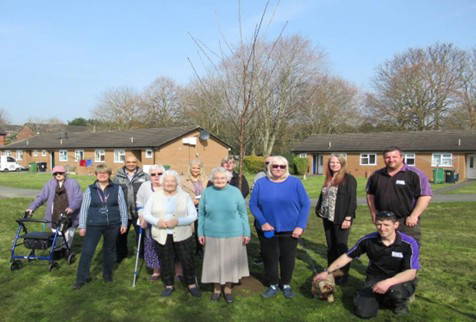
Tree planting as part of the “Queen’s Canopy” in conjunction with Shropshire Council’s Tree Team March 2022
4.2 Analysis of Current Energy Performance (SAP ratings)
The following chart and data illustrates the performance by Energy Performance rating and SAP as at 1st April 2022 – where A is the highest rating and G the lowest.
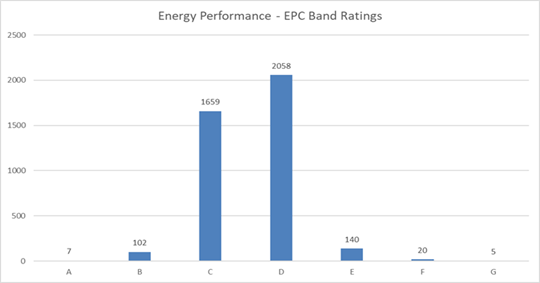
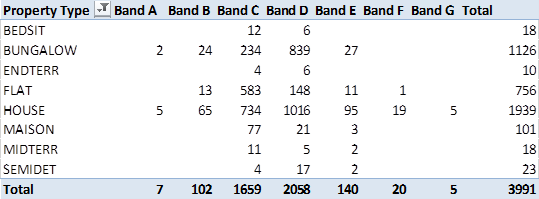
We are in the process of obtaining EPC’s for all our housing stock and tie them in with improvements to heating systems, thermal efficiency etc. in order ensure that we have the most accurate information.
We are committed to improving the energy performance and Carbon Emission reduction for our housing stock. We have carried out a number of actions to improve energy performance and reduce carbon emissions. We arranged for a 3rd party review of our stock to be carried out in April 2021 which formed the basis of our Sustainability Framework and Action Plan.
We have continued to access the Renewable Heat Incentive funding, including retrospective air source heat pump installations (ASHP). This funding is being recycled to provide further ASHP installation to off gas grid properties. This
funding came to an end for new applications on the 31st March 2022 and we are waiting to find out whether there will be a replacement.
We have been successful in obtaining grant funds for a number of other energy efficiency schemes. The most recent being part of a consortium bid led by Shropshire Council for Social Housing Decarbonisation Fund (SHDF) to carry out External Wall Insulation to 26 non-traditional properties in Gobowen.
4.3 Key Actions
We are committed to improving the energy efficiency of our housing stock, reducing our carbon footprint and making Affordable Warmth as outlined in our Sustainability Framework, a reality for all our tenants. We also want to reduce the energy spend for us as landlords which also will benefit our leaseholders.
We continue to target those properties with the lowest energy ratings as well as those with solid wall construction.
We will continue to review both ECO and Government backed programmes and how we as landlords can ensure that we receive the most benefit for us and our tenants. However it is our intention to:
- Continue with programmes that improve the energy efficiency of our stock (External Wall Insulation, replacement external doors, thermal insulation).
- Complete Decent Homes refusals in particular upgrades to loft insulation at change of tenancy.
- Continue to identify additional funding sources to enable renewable technologies such as air source heating to be rolled out to greater numbers of “off mains gas” properties to reduce the reliance on solid fuel and oil fired heating. We have recycled Renewable Heat Incentive payments into further air source heat units. We are waiting confirmation as to what, if any funding will be available following the end of this scheme on the 31st March 2022.
- Support residents through the provision of advice, information and raising awareness, in particular relating to use of heating systems with follow up advice in the months after new tenancies have commenced. Also to work with the Financial Inclusion team to help them identify households that are experiencing fuel poverty and ensure that appropriate advice is given to them
As part of our new build programme we have ensured that new developments incorporate effective and useable energy efficiency measures that work for our tenants, and will continue to look to improve this for future programmes. When we considered the purchase properties existing open market properties including back under the Right to Buy scheme we will continue to ensure that funding is available to carry out any works that may be required to improve the property’s energy performance to at least band C.
5. FUTURE INVESTMENT PLANS
5.1 Key Actions
It is the intention that a “good mix” of investment takes place across the stock to ensure that tenants have a safe and comfortable home that meets minimum standards of accessibility and energy efficiency as well as the Decent Homes Standard. However, we also need to make sure that we link programmes together to ensure that we demonstrate value for money. We want to ensure that we increase the desirability of our properties as this should also help to reduce future maintenance requirements as generally tenants will keep better care of their properties, including carrying out minor repairs themselves when they are satisfied and are happy with their homes.
We have carried out further stakeholder (tenants, leaseholders, board members and staff) consultation that has determined the common themes that it is felt should be priorities in future investment. These have tied in with the key objectives we identified in 2.3 and also those set out below.
- Increasing the numbers of our stock insuring that we allow for changes in tenants needs (e.g. additional two bed bungalows)
- Energy Improvements to help towards reductions in tenants fuel costs
- Greater focus on the exterior of our properties including fencing, pathways, communal area lighting (solar) etc. to make the properties and estates more attractive and less likely to have anti-social behaviour etc. on going
- Work to improve the impact of crime and improve security
- Garage sites – all potential sites have been included in new build programmes so these are now reviewed for additional surface car parking where there is a shortage of suitable on site car parking.
- Improvements to green and open spaces.
5.2 Other Key Investment Activities
5.2.1 Health, safety and legislative works
A significant proportion of our investment to date, and for the foreseeable future will need to be spent on essential works, which if not done will have consequences for us as landlords. The key areas are as follows:
Electrical Testing and Upgrades
This programme of Periodic Electrical testing has been ongoing and all properties have a current certificate. We have continued with our programme of upgrades and rewires resulting from these periodic inspections. All our properties to have mains operated smoke and carbon monoxide detectors, and we install heat detectors when we upgrade a property’s kitchen.
Asbestos
In order to fulfil our duties under the Management of Asbestos regulations we are required to ensure that we have records relating to Asbestos containing materials (ACM) within our stock. All properties within our stock will have been surveyed to determine where ACM’s are located. Where necessary these have been removed, for example if they are exposed and could easily be damaged. We carry out regular prioritised re-inspections to ensure that the ACM has not been damaged
and this is carried out at regular intervals depending on the risk factors (e.g. in communal areas this will be on an annual basis and for individual properties this will be at the time of the external painting programme to keep disruption of tenants to a minimum). We make this information available to tenants to assist them in any works they wish to carry out themselves.
Decent Homes Refusals
We do have a number of tenants who have refused Decent Homes works. We continue to carry out the work that has been “opted out” at the time of change of tenancy, or in agreement with the new tenant as soon as possible after they have moved in. Where tenants have opted out of central heating installations we continue to contact them at least annually to determine whether they still wish to “opt out” of this programme.
Renewable Technologies
We continue to review this area and explore implementation when appropriate, in particular in relation to reducing potential for fuel poverty. We continue to access additional funding when available e.g. the remaining Renewable Heat Incentive grant which is recycled into further air source heat systems.
A number of our new developments now have solar panels installed and we are exploring opportunities to install these on the existing stock in partnership with tenants and leaseholders.
Fire Risk Assessment
Under the Regulatory Reform (Fire Safety) Order 2005 we are required to carry out annual Fire Risk Assessment (FRA) reviews in a number of our properties where there are communal areas. All properties requiring a FRA have been assessed, and the recommendations of these reports are prioritised and programmed as part of our capital programme. Annual reviews are scheduled and regular inspections are also carried out by the housing management team to ensure that communal areas are kept clear of potential risks.
We await the Building Safety Bill’s Royal Assent and will implement recommendations. Although it should be noted that our housing stock does not have any units that are classified as being at high risk.
5.2.2 Maintenance and Improvement Works
Kitchens and Bathrooms
Subject to current condition surveys provision has been made for the replacement of kitchens and bathrooms. It should be noted that it is very difficult to predict when the replacement cycle of kitchen units is required. This replacement will depend on a number of factors as this can be affected by the way a tenant looks after them, as well as the product itself. It is acknowledged that some properties may need their kitchens replacing earlier due to damage beyond normal wear and tear but we will pick this up on our cycle of inspections. Where this does occur it may be necessary to consider recharging the tenant for a percentage of the cost of replacement where the need for replacement is not due to fair wear and tear.
Roofing
The age profile of our housing stock means that whilst technically the roofs remain sound it is prudent to allow for future programmes of replacement based on average component replacement lifecycles. These replacements have been identified following the programme of ongoing stock condition surveys. We have had a successful roofing programme on going throughout the recent pandemic, as this work could be carried out whilst allowing for social distancing. It continues to be the intention that where the responsive repairs team identifies works to roofs as being required, but the issues are not detrimental to the property or tenant these will be included within the planned maintenance programmes to obtain Value for Money.
Garage Site Review
A number of garage sites were identified and included within our New Build Programmes. Where sites are not suitable for inclusion we continue to review then and give consideration to alternative uses e.g. surface car parking.
Environment and Estate works
In order to improve the appearance of the areas and help ensure that the areas remain attractive places to live an annual sum is set aside to support improvements and maintenance in areas that may be problematic. As previously mentioned consultation takes place with the local community as to what improvement works can be carried out. Where resources allow we have carried out these works via our in house grounds maintenance team. This team came “in house” in April 2020, and since this establishment growth we have seen a great reduction in complaints relating to grounds maintenance generally.
Stock Growth and development
It is recognised that there is an acute shortage of affordable homes in Shropshire. We completed our first phase of new build (68 units) funded from the Homes and Communities Agency (HCA) and via Shropshire Council’s S106 monies. Phase 2 consisted of a further 31 units and completed in September 2016. This framework contains provision to support this development and that of additional units to be funded via the recycling of capital receipts from the sale of units under the revised Right to Buy scheme (1-4-1 funding). These proposals are explored further in section 8 Development and New Build.
6. INVESTMENT PLAN 2022/23
The self-financing regime had seen an increase in funds available to deliver capital investment in the future, however this was greatly impacted by the Budget announcement on the 8th July 2015 of a 1% rent reduction for all social rents each year from the 1st April 2016 and for the following 4 years.
7.1 Key Actions
We will work with Shropshire Council to determine their priorities regarding Carbon Emission reductions and the HRA’s linkage to the Council’s delivery of Adult Social Care priorities as this will impact on investment of the rest of the stock.
Over the 30 year investment period projected capital income base on the Major Repairs Allowance is expected to cover the projected need for programmed maintenance, although supply chain pressure in the global economy in early 2022 may be problematic if this continues beyond the short term. This may restrict any aspirational programmed works we may wish to undertake.
We continue to improve the quantity and quality of the information that we hold regarding the condition of our properties. As we hold condition information on all our stock, including communal areas we have been able to produce an investment profile based on component replacement and we are able to vary this. This means that we are able to produce a range of scenarios for planning different investment profiles.
However, following the programme of condition surveys being completed we continue to identify gaps in the short and medium term and we therefore have had to review and re-assess the timing of the investment programme to make delivery both more affordable and deliverable, for example the impact of carbon emission reduction throughout the stock, and the on-going maintenance of garage sites with limited if any income in return.
7.DEVELOPMENT AND NEW BUILD
7.1 Key Actions
One of the key objectives of the Asset Management Framework is to increase the number of properties available through development or acquisition. Whilst maintenance and improvement of our existing stock is important it is equally important to demonstrate a clear commitment to tackling the shortage of affordable homes in Shropshire. We are keen to establish ourselves as a developer of new housing, and to continue to develop our partnership working with the Homes and Communities Agency.
We had secured approval and funding to develop 68 new properties which were completed in March 2015. These were a mix of affordable rent and shared ownership. We have commenced a second phase of development consisting of 31 units that are a mix of affordable rent, shared ownership and for the first time market sale.
All the sites within this first and second phase are on Housing Revenue Account land, so at nil cost to the Council.
We continue to work closely with Shropshire Council regarding land held within their General Fund for future development, whilst also helping them deliver their own corporate priorities e.g. provision of specialist housing units. We have completed the transfer of two sites within Shrewsbury from the General Fund into the HRA. These sites are the first outside of our “traditional” management areas and are due to be completed in March 2023
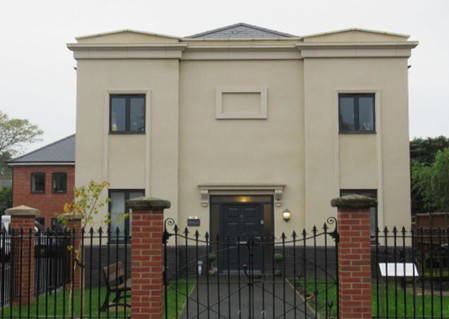
We worked with Shifnal Town Council with the redevelopment of a former Baptist Chapel site that was a derelict building within the centre of the town. The building has been demolished and 7 units (a mixture of shared ownership and affordable rent) where completed in April 2019. This experience of working with a third party has proved invaluable when developing subsequent sites.
Although we have limited funding at this time we will continue to allow resources to be available to put us into the best position to take advantage of future funding streams including the recycling of receipts from Right to Buy sales and additional borrowing when available headroom in our business plan allows as we can generate a rental income stream on these new units.
7.2 Property Acquisition Strategy
Growth in stock can also be achieved through the acquisition of property, although this is a secondary route at this time. This may offer a more straight forward alternative compared to site redevelopment, and certainly is a faster route to new stock.
Acquisitions to date have been via the open market, although we are also able to consider acquisitions through “Right to Buy” buyback opportunities. It has been necessary to ensure that any properties purchased in this manner are of an acceptable condition so not to have a detrimental effect on the capital programme for the existing stock.
We have also been able to purchase S106 properties from 3rd party developers including Shropshire Council’s development company, Cornovii Developments. This has meant that as well as being able to secure additional stock we have some limited involvement in the specification of these units and are able to secure units in diverse areas of the county where we have not traditionally had stock.
Following approval by Shropshire Council we are now concentrating our resources on purchasing properties for use by Shropshire Council as temporary
accommodation. These properties are currently 1 and 2 bed units. The funding for them, including upgrades prior to letting is partly through the HRA and partly via S106 monies.
These potential properties are either freeholds, or if leasehold where Shropshire Council is already the freeholder, to be located within the “market towns” and be able to be brought up to Band C energy efficiency standards relatively cost effectively.
8.GARAGE SITES AND LAND ASSETS
The service currently manages a number of garage sites throughout the stock.
The future of garage sites generally is covered in the Garage Framework which is currently under review.
We have carried out a site review of all our garage sites. Following this review we have identified the following actions
- Where there is evidence of sustainable demand we will continue to allocate garages and take action to reduce void numbers.
- Consideration is being given to modest investment on sites where there are low void rates and this investment will help to sustain or improve levels of demand.
- A viability exercise continues to be carried out to explore options for underused garage sites. Where it is identified that these garages are uneconomic to be repaired we have demolished existing garages creating open parking spaces.
- We have offered allocated parking spaces on these sites, at a cost but these have not received any interest from tenants or other residents in the locality.
9. DELIVERY OF THE ASSET MANAGEMENT FRAMEWORK
9.1 Procurement
The Asset Management team has continued to develop well and, with limited resources has delivered significant improvements to the housing stock. From a starting point in April 2009 of 29.8% non-decency in the stock as at the 31st March 2012 the non-decency was at 11.9%, at the 31st March 2013 the non-decency was at 9.4%, at the 31st March 2014 the non-decency was at 5.59% we have met the HCA agreed target of 0% non-decency by 31st March 2015. We have continued to maintain this standard to date.
Since 2009 we have effectively procured all the Decent Homes and Programme Maintenance contracts to ensure that we are delivering Value for Money. This procurement has been in line with Shropshire Council’s Procurement Strategy, and now our own Procurement and Contract Rules. We continue to demonstrate considerable savings in particular in relation to heating system replacements and kitchen and bathroom replacements.
Our key principles in procurement are:
- Strong Leadership – recognising the strategic importance of property
- Clear roles and responsibilities for all stakeholders
- Effective stakeholder involvement – to ensure that the contract or service being procured meets the needs and requirements of all customers
- Investment in training – to ensure that all staff involved in the procurement of contracts have sufficient support, skills and training to undertake procurement effectively
- Delivering Value for Money, and ensuring Probity in line with our Contract and Procurement Rules.
- Promoting Equality and Diversity – to ensure that all procurement complies with our Equality and Diversity Strategy
- Sustainable Procurement – to ensure that our contractors carry out our contracts taking into account risks to our environment.
9.2 Key Actions
Following the creation of Shropshire Towns and Rural Housing Ltd it was necessary for us to carry out a review of our procurement and contract rules to ensure that value for money / best practice is being achieved. Following the approval of our own Contract Rules in March 2013 an action plan was developed to ensure we are meeting its requirements and this continues to be reviewed and implemented.
We have now hold considerable data relation to the stock, including general stock condition, asbestos surveys, energy performance information and periodic electric inspections. In order to maintain this information, ensure that it is valid and that we carry out our duties as landlords it is necessary to maintain a rolling programme of inspections. In order to assist with this programme, and to reduce the potential for discrepancies between surveys mobile technology and standardisation of survey methods have been introduced. This information is assisting in ensuring that accurate programmes of work are produced allowing for more effective financial planning. This information has and will continue to allow for more effective strategic reviews of the stock and better prioritisation of programmes. We are in the process of “going live” with Vision software which will mean we will be able to hold all asbestos data rather than be reliant on 3rd party asbestos surveying contractors. This is due to be rolled out in Autumn 2022. We will consider using bespoke asset management software if the benefit of this investment can be demonstrated.
The Responsive Repairs team review into performance and value for money is ongoing. We have now implemented of mobile working for the team as a whole. Since March 2020 we have increased the size of our in house repairs team following the end of our “overflow repairs contract”.
We have continued to work with specialist contractors who use our “contractor portal” software which means that our in house contact centre is able to send repair requests direct and have access to appointment information if necessary. This continues to demonstrate a considerable improvement to communication regarding repairs and so improved customer satisfaction levels. We have continue
to procure of the supply of materials via a sole supplier for general materials and a sole supplier for electrical supplies to the Responsive Repairs Team. This has continues to be reviewed and the working relationships developed which was of particular benefit during the pandemic. We are continue to develop the delivery of van stocks via this supplier and our sole software supplier.
10. MONITORING AND REPORTING
10.1 Key Actions
The actions outlined in this Framework will be incorporated into the service improvement plan.
10.2 Shropshire Council will monitor the following areas;
- Delivery and Maintenance of Decent Homes Programme and HRA Capital Programme
- Delivery of HCA AHP 2021-26
The service will also monitor the following Service Performance Indicators.
- Energy efficiency – the average SAP rating of STAR Managed dwellings
- Cumulative average waiting time for Major Adaptations for our tenants
- % of properties with an asbestos survey
- % of properties with a valid Gas Safe Certificate
- Customer Satisfaction with way repairs and maintenance is dealt with
11. REVIEW OF POLICY
This policy will be reviewed on an annual basis until the key supporting policies, reviews and programmes are developed to ensure that priorities identified are still relevant
This review will encompass the following issues:
- Outcomes of Condition Surveys and impact on finances as per the Business Plan
- Outcomes of major asset reviews –
- Stakeholder review and priorities
- Changes to Legislation
- Programme and impact of amendments to the Right to Buy scheme
- Review of Shropshire Councils Housing Strategy
12. ROLE OF THE MANAGER
Shropshire Towns and Rural Housing Ltd is determined to have a service which exceeds customers’ expectations, is constantly improving its performance and which will not duck difficult decisions. To move our service forward to excellence there is
a need to substantially improve self-awareness and performance management, customer focus, the effective use of resources and learning from outside with encouragement for innovation.
Managers are key to the required cultural change and high performance is expected. In particular they should:
- know how their teams and others are performing against in-house targets and standards, best practice and procedures;
- commitment to a high standard of health and safety
- ensure close working across the service.
- intervene and support staff with training, supervision and motivation to maintain high standards;
- particularly pursue high standards of customer care;
- ensure this policy and relevant service standards are rigorously applied;
- communicate effectively so that staff are aware of improvement plans and aspirations, how their role contributes to this and where their performance needs to improve;
- Use new technology to advance record keeping and efficient working practices.
- It is the managers’ responsibility to ensure that the action plan resulting from this framework is implemented in a timely manner with all officers and contractors fully involved.
- The Manager should also demonstrate and ensure that all understand the importance of this area of work, the impact it has to tenants lives and how this area of work links to the organisations overall priorities and where appropriate those of Shropshire Council too.
13. SCOPE OF THIS FRAMEWORK
This Framework applies to all areas of the service and business planning, provision and delivery, whether provided directly by the service, or through contractors. It, therefore, has relevance to all of the following:
- the Team members
- Tenants, leaseholders and others living in the communities in which we have housing stock that we manage on behalf of Shropshire Council
- Contractors employed by Shropshire Towns and Rural Housing Ltd.
- Other teams we work with within Shropshire Council
- Other partners and other stakeholders
14. EQUALITY AND DIVERSITY
We are committed to delivering a high standard of customer service at all times. It is recognised that different communities and neighbourhoods have different needs and aim to treat everyone fairly, and will treat any support needs with sensitivity, tact and diplomacy.
We will ask tenants about their needs so that we can provide our services in the way that best matches their needs.
The service provided will be monitored to make sure that they are fair and publish the results
We will undertake Equality Impact Assessments for customer facing housing policies to make sure that tenants are not treated unfairly. These checks will be undertaken with customers.”
The service will use the information provided by tenants about themselves and the information held about their homes to assist in addressing the issue of affordable warmth and fuel poverty.
15. REFERENCE DOCUMENTS
- The 2021-26 Affordable Homes Framework (last updated 15th December 2020)
- The Homes England Affordable Homes Programme Framework Agreement.
- The Localism Act 2012
- “Levelling Up the United Kingdom – An Executive Summary published in February 2022
- Affordable Housing Supply in England – last updated 18th November 2021 – Department for Levelling up, Homes and Communities
- Rural Housing – Availability and Affordability last updated 5th April 2022 (DEFRA)
- Shropshire Local Housing Market Assessment 2021
- Shropshire Housing Strategy 2020-25
- Shropshire Councils Adult Social Care Strategy “Promoting Wellbeing and Independence in our Communities” August 2018.
- The Equality Act 2010
- Energy Company Obligation 2021 (ECO4)
- Extending the Right to Buy (England) – Briefing Paper number 07224 15th November 2015